
The 2-Week Reset Challenge

FREE GUIDE: 2-WEEK RESET
Download the free 2-Week Reset Guide, inspired by podcast highlights, with actionable nutrition, lifestyle, and gut health tips you can start today.
What to expect:
14-Day Nutrition Plan
Recipe Book
Gut Health Hacks
Nutrition Tips
Fitness Routines
Community
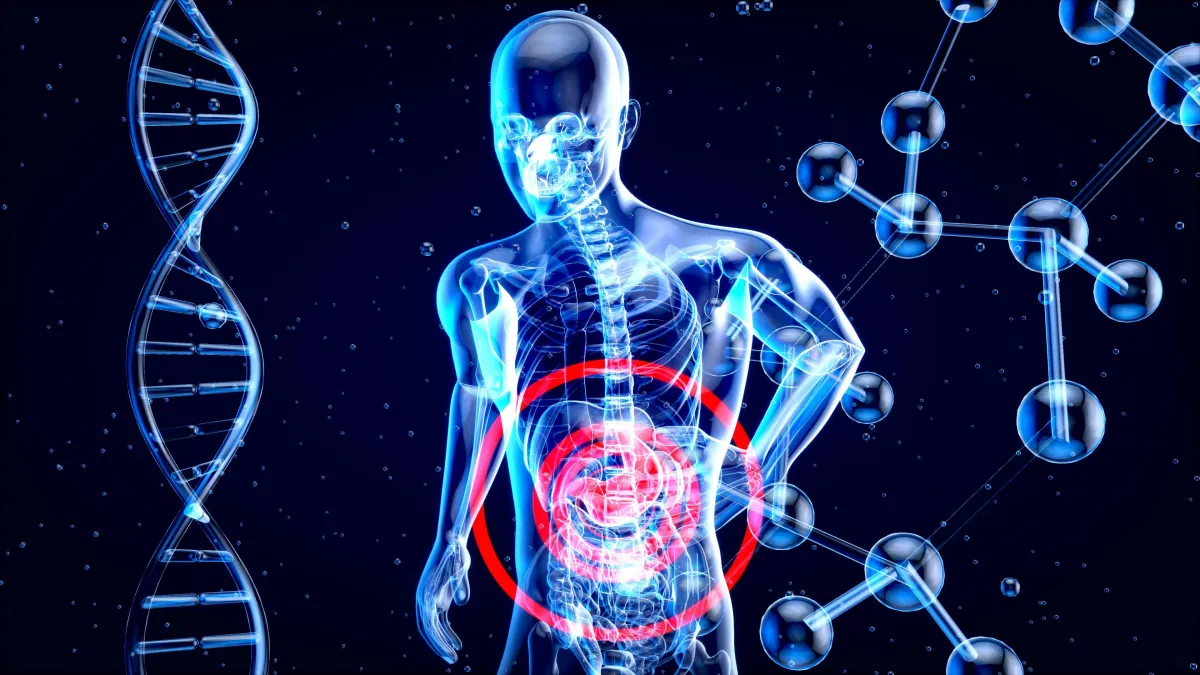
How Digestion Works: Your Digestive System Explained
How Digestion Works: Your Digestive System Explained
Written by Kerri Rachelle, PhD(c), RDN, CSSD, FMP-AC
Founder & CEO, REV0lution | Doctor of Integrative & Natural Medicine Candidate
Quick Answer
Digestion mechanically and chemically breaks food into usable components, absorbs nutrients and water, moves material through the intestines and eliminates what remains.
Key Takeaways
Digestion begins in the mouth with chewing and saliva.
The stomach mixes food with acid and enzymes while controlling its release into the small intestine.
The pancreas, liver and gallbladder provide substances needed to digest carbohydrates, protein and fat.
Most nutrient absorption occurs in the small intestine.
The colon absorbs water, supports microbial fermentation and helps form stool.
What Is Digestion and How Does It Work?
Digestion may look simple from the outside: food goes in, the body takes what it needs and waste eventually comes out. Internally, it requires precise coordination among muscles, nerves, hormones, enzymes, acids, bile, blood vessels, intestinal cells and microbes.
Each part of the gastrointestinal tract prepares food for the next. A disruption early in the process may therefore create symptoms farther downstream.
Understanding this sequence helps explain why abdominal discomfort cannot always be traced to the exact place where it is felt—and why symptoms alone rarely identify a single cause.
Where Does Digestion Begin?
The sight, smell and expectation of food can begin preparing the digestive system to eat. Once food enters the mouth, chewing physically breaks it into smaller pieces and mixes it with saliva.
Saliva moistens food so it can be swallowed and contains enzymes, including salivary amylase, that begin carbohydrate digestion. The tongue shapes the chewed food into a soft mass called a bolus and moves it toward the throat.
Chewing does not need to follow a perfect number of repetitions. Its practical purpose is to reduce food into manageable pieces and give the digestive process an effective beginning.
Difficulty chewing due to dental problems, dry mouth, pain or swallowing concerns can affect this first stage and deserves appropriate evaluation.
How Does Food Move Through the Esophagus?
After swallowing, food enters the esophagus. Muscular contractions called peristalsis move it downward toward the stomach.
At the bottom of the esophagus is the lower esophageal sphincter. This muscular region opens to allow food to enter the stomach and then helps limit stomach contents from flowing backward.
Reflux occurs when stomach contents move into the esophagus. That can happen for several reasons, including changes in sphincter function, abdominal pressure, anatomy, stomach emptying, meal size and certain foods or medications.
Reflux should not automatically be interpreted as proof of either too much or too little stomach acid. Persistent reflux requires a broader evaluation.
What Happens in the Stomach?
The stomach temporarily stores food while mixing it with acid, enzymes and fluid. Its muscular walls churn the meal into a semiliquid mixture called chyme.
Stomach acid helps unfold proteins, activates the protein-digesting enzyme pepsin and creates an environment that limits many swallowed microorganisms. Acid is therefore a normal and necessary part of digestion.
The stomach also produces intrinsic factor, a protein needed for vitamin B12 absorption later in the small intestine.
A mucus-based barrier helps protect the stomach itself from its acidic contents. When that protection is disrupted—or when conditions such as H. pylori infection, ulcers or inflammation are present—pain and other symptoms may develop.
The stomach does not release an entire meal into the intestine at once. It gradually sends small amounts through the pyloric sphincter and into the first section of the small intestine.
What is the Duodenum?
The first portion of the small intestine is called the duodenum. This is where chyme from the stomach meets bicarbonate, pancreatic enzymes and bile.
The pancreas releases bicarbonate to help neutralize stomach acid. It also releases enzymes that digest major nutrients:
Amylases continue carbohydrate digestion.
Proteases break proteins and peptides into smaller components.
Lipases help break down dietary fat.
The liver produces bile, which is stored and concentrated in the gallbladder. When fat enters the small intestine, the gallbladder releases bile into the duodenum.
Bile helps disperse fat into smaller droplets, creating more surface area for digestive enzymes to work. This process supports the absorption of fat and fat-soluble vitamins.
Someone who has had their gallbladder removed still produces bile in the liver. Bile flows more continuously into the intestine because it is no longer stored and concentrated in the gallbladder.
Symptoms involving pancreatic or biliary function require medical assessment. Upper abdominal discomfort, pale stool, greasy stool, nausea after eating or pain near the right upper abdomen can have several causes and should not be self-diagnosed.
Where Are Most Nutrients Absorbed?
The small intestine consists of three sections: the duodenum, jejunum and ileum. Its inner surface contains folds and fingerlike projections called villi and microvilli, which create extensive surface area for absorption.
The jejunum absorbs much of the carbohydrate, protein, fat, vitamin, mineral and water content entering the small intestine.
The ileum continues absorption and has specialized roles involving vitamin B12 and bile salts. Bile salts are largely recycled back to the liver so they can be used again.
Once nutrients cross the intestinal lining, they enter either the bloodstream or lymphatic system. Many water-soluble nutrients travel through the portal circulation to the liver, where they can be processed, stored or redistributed. Much of the absorbed dietary fat initially travels through lymphatic vessels.
This stage is why digestive health and nourishment are so closely connected. Eating a nutrient-rich diet is important, but the body must also digest and absorb those nutrients.
Malabsorption can occur with conditions such as celiac disease, pancreatic insufficiency, inflammatory bowel disease, certain infections, intestinal surgery and other disorders. It cannot be diagnosed solely by seeing occasional food fragments in the stool.
What Does the Large Intestine Do?
Material that has not been absorbed enters the large intestine, or colon. The colon absorbs water and electrolytes while compacting the remaining material into stool.
The colon also contains the greatest concentration of gut microbes. These organisms ferment some carbohydrates and fibers that human enzymes did not digest earlier.
Fermentation produces gases and compounds called short-chain fatty acids. Gas production is therefore a normal part of microbial activity. Its amount and associated discomfort vary among people and according to the foods eaten, the microbiome, intestinal transit and digestive conditions.
The colon is not merely a waste container. It participates in water balance, microbial metabolism, immune communication and the final stages of stool formation.
How Does the Body Form and Eliminate Stool?
Stool contains water, undigested food components, microbes, shed intestinal cells and substances the body is eliminating.
Muscular contractions move stool through the colon toward the rectum. As the rectum fills, nerves send signals that create the urge to have a bowel movement. Coordinated relaxation and contraction of the pelvic-floor and anal muscles then allow stool to pass.
Bowel frequency varies. Some healthy people have more than one bowel movement daily, while others go less frequently. Comfort, consistency, ease of passage and changes from the person’s usual pattern often provide more useful information than attempting to meet one perfect number.
Constipation, diarrhea, urgency and incomplete evacuation may involve motility, stool consistency, pelvic-floor coordination, medication, food intake, illness, stress or several factors at once.
How Does the Nervous System Control Digestion?
The gastrointestinal tract has its own extensive nerve network called the enteric nervous system. It works with the brain, spinal cord and autonomic nervous system to regulate secretion, movement, blood flow and digestive sensation.
The parasympathetic nervous system supports many “rest-and-digest” functions. The sympathetic nervous system becomes more active during stress and may change appetite, stomach emptying, intestinal movement and pain perception.
Stress can therefore produce genuine physical digestive symptoms. It may accelerate movement in one person and slow it in another. It can also make normal digestive sensations feel more intense.
This two-way communication is the foundation of the gut-brain axis. Digestive symptoms can increase distress, and psychological stress can intensify digestive symptoms.
What Can Digestive Symptoms Tell You?
The timing and characteristics of symptoms can provide clues. Feeling full very quickly may direct attention toward the stomach. Greasy stool may raise questions about fat digestion or absorption. Lower abdominal bloating may involve fermentation, stool retention, motility or other intestinal factors.
Clues are not diagnoses.
Bloating does not automatically prove SIBO. Reflux does not prove low stomach acid. Floating stool does not, by itself, prove inadequate bile or pancreatic enzymes. Constipation does not always result from inadequate fiber.
Similar symptoms can develop from different mechanisms, while one condition can produce several symptoms. That is why a thoughtful digestive evaluation considers symptom timing, bowel patterns, medical history, medications, nutrition, stress, sleep and appropriate testing.
Can Poor Digestion Affect Energy Levels?
The digestive system supplies the raw materials used throughout the body. Amino acids support muscle and tissue repair. Carbohydrates and fats provide energy. Vitamins and minerals participate in oxygen transport, thyroid function, nervous-system activity, immune function and thousands of chemical reactions.
Digestive disease can therefore contribute to fatigue when it interferes with intake or absorption. Fatigue may also arise from anemia, thyroid dysfunction, sleep disruption, medication, inadequate food intake, infection and many other causes.
A connected evaluation avoids assuming that every energy problem begins in the gut while still recognizing digestion as one important part of the picture.
The Bottom Line
Digestion is an organized journey involving far more than the stomach. The mouth begins mechanical and chemical digestion. The esophagus transports food. The stomach mixes it with acid and enzymes. The pancreas, liver and gallbladder help complete digestion. The small intestine absorbs most nutrients, and the colon reclaims water, supports microbial fermentation and forms stool.
Symptoms can offer useful clues about where the process may be struggling, but they rarely provide a diagnosis by themselves.
Understanding normal digestion gives us a better way to interpret bloating, reflux, constipation, diarrhea and discomfort—without reaching immediately for a restrictive diet, supplement stack or oversimplified explanation.
Medical Disclaimer: This article is for general educational and informational purposes only and does not provide individualized medical or nutrition advice. It is not intended to diagnose, treat, cure, or prevent disease or replace care from a qualified healthcare professional. Do not change your medications, supplements, diet, fasting schedule, or healthcare plan based solely on this content. [Read the full Medical Disclaimer and Terms & Conditions.]
Frequently Asked Questions
Where does digestion begin?
Digestion begins before food reaches the stomach. Seeing, smelling or anticipating food can initiate nervous-system signals that prepare the digestive tract. Chewing then breaks food into smaller pieces, while saliva moistens it and begins the chemical digestion of starch.
What does stomach acid do?
Stomach acid helps unfold dietary proteins, activates the protein-digesting enzyme pepsin and creates an environment that helps limit certain microorganisms entering with food. The stomach also mixes food with digestive secretions before gradually releasing it into the small intestine.
Where does most digestion and nutrient absorption occur?
Most chemical digestion and nutrient absorption occur in the small intestine. The pancreas releases enzymes that help digest protein, carbohydrate and fat, while the liver produces bile to support fat digestion. The intestinal lining then absorbs nutrients into the bloodstream or lymphatic system.
What do the liver, gallbladder and pancreas do during digestion?
The liver produces bile, and the gallbladder stores and concentrates it before releasing it into the small intestine. Bile helps disperse dietary fat so it can be digested and absorbed. The pancreas releases digestive enzymes and bicarbonate, which helps neutralize acidic material arriving from the stomach.
Are digestive enzymes and bile the same thing?
No. Digestive enzymes chemically break carbohydrates, proteins and fats into smaller components. Bile is not an enzyme; it helps emulsify fat, creating smaller droplets that pancreatic enzymes can digest more effectively. Both are important, but they perform different jobs.
How long does digestion take?
There is no single normal digestion time. Food generally moves through the stomach and small intestine within several hours, while movement through the colon takes longer. Meal composition, hydration, activity, medications, stress and individual motility can all influence total transit time.
Is it necessary to have a bowel movement every day?
Not necessarily. Normal frequency varies among individuals. A healthy pattern may range from several bowel movements per day to several per week, provided the pattern is comfortable, consistent and not accompanied by significant straining, pain or incomplete evacuation. A meaningful change from your usual pattern deserves attention.
Can stress interfere with digestion?
Yes. The brain and digestive tract communicate continuously through neural, hormonal and immune pathways. Stress can affect appetite, stomach emptying, intestinal movement, secretion, visceral sensitivity and the perception of digestive symptoms. This does not mean symptoms are imaginary; it means nervous-system regulation is part of digestive physiology. A 2023 review describes these interconnected effects.
What are signs that digestion may not be working properly?
Persistent reflux, nausea, abdominal pain, excessive bloating, difficulty tolerating fatty foods, chronic diarrhea, constipation and unexplained changes in stool may warrant evaluation. Fatigue, anemia and nutrient deficiencies can also occur when digestion or absorption is impaired, although these findings have many possible causes.
When should digestive symptoms be medically evaluated?
Seek medical care for blood in the stool, black stool, persistent vomiting, difficulty swallowing, unexplained weight loss, fever, anemia, severe or worsening abdominal pain, nighttime symptoms or a significant change in bowel habits. Persistent symptoms should be properly evaluated before being treated with a restrictive diet or self-directed protocol.
References
Goodman BE. Insights Into Digestion and Absorption of Major Nutrients in Humans. Adv Physiol Educ. 2010;34(2):44–53. PMID: 20522896.
Furness JB. The Enteric Nervous System and Neurogastroenterology. Nat Rev Gastroenterol Hepatol. 2012;9(5):286–294. PMID: 22392290.
Furness JB, Callaghan BP, Rivera LR, Cho HJ. The Enteric Nervous System and Gastrointestinal Innervation: Integrated Local and Central Control. Adv Exp Med Biol. 2014;817:39–71. PMID: 24997029.
Omer E, Chiodi C. Fat Digestion and Absorption: Normal Physiology and Pathophysiology of Malabsorption, Including Diagnostic Testing. Nutr Clin Pract. 2024;39(Suppl 1):S6–S16. PMID: 38429963.
Bharucha AE, Lacy BE. Mechanisms, Evaluation, and Management of Chronic Constipation. Gastroenterology. 2020;158(5):1232–1249.e3. PMID: 31945360.
Leigh SJ, Uhlig F, Wilmes L, et al. The Impact of Acute and Chronic Stress on Gastrointestinal Physiology and Function: A Microbiota–Gut–Brain Axis Perspective. J Physiol. 2023;601(20):4491–4538. PMID: 37756251.
Cryan JF, O’Riordan KJ, Cowan CSM, et al. The Microbiota-Gut-Brain Axis. Physiol Rev. 2019;99(4):1877–2013. PMID: 31460832.
de Vos WM, Tilg H, Van Hul M, Cani PD. Gut Microbiome and Health: Mechanistic Insights. Gut. 2022;71(5):1020–1032. PMID: 35105664.