Functional medicine certification for health practitioners

A Professional Pathway to Practice Functional Medicine.

ROOTED is a 30-week functional medicine certification for health professionals who want to understand the physiology behind chronic symptoms, interpret labs with greater confidence, and build personalized plans that make sense for the person in front of them.

Whether you are beginning your functional medicine education or have completed previous training but still struggle to apply it, ROOTED gives you the structure, tools, and practical guidance to practice with greater clarity and confidence.

30 weeks of structured education 12 curriculum sections Weekly course unlocks Open enrollment

The ROOTED Approach

Understand the whole person. Connect the clinical picture.

Health is shaped by interacting systems, individual history, nutrition, environment, lifestyle, and lived experience.

ROOTED explores those relationships through 12 curriculum sections, connecting scientific foundations with assessment, purposeful testing, care planning, and reassessment.

The goal is to help you develop an organized approach to individualized care—and understand why a next step makes sense.

Root-cause thinking.
Practical application.

Who is ROOTED for? →

Inside ROOTED

Twelve sections.
Connected clinical thinking.

A curriculum connecting physiology, nutrition, functional testing, and individualized care. Select a section to explore its subjects, clinical applications, and accompanying tools.

01 Introduction & Foundations of Functional Medicine

Establish a foundation in functional medicine through systems thinking, whole-person assessment, and the relationships between symptoms, history, physiology, and lived experience.

Explore the strengths and limitations of different care models, how functional and conventional approaches can work together, and the role of antecedents, triggers, and mediators in organizing the clinical picture.

Topics & Applications

  • Functional and conventional medicine
  • Clinical timelines and the functional medicine matrix
  • Antecedents, triggers, and mediators
  • Practitioner confidence, boundaries, and sustainable practice
  • Nutrition, movement, sleep, stress, environment, and relationships

Examples of Accompanying Tools

  • Functional vs. Conventional Medicine
  • Patient Alignment Inventory
  • Lifestyle Medicine Integration practice plan
02 Gut Health & The Microbiome

Explore digestive physiology, the microbiome, and intestinal barrier function. Connect these foundations with patterns of digestive dysfunction, testing, therapeutic diets, and individualized intervention sequencing.

Study the 5R framework and foundational priorities before supplement protocols, alongside clinical considerations in common and complex digestive presentations.

Topics & Applications

  • GERD, IBS, IBD, celiac disease, and gluten sensitivity
  • SIBO, H. pylori, dysbiosis, and parasites
  • Stomach acid, bile, and digestive enzymes
  • Stool testing and other functional assessments
  • AIP, low FODMAP, SCD, elimination, and low-histamine diets

Examples of Accompanying Tools

  • Condition-Based Gut Protocol Builder
  • Therapeutic diet guides and patient handouts
  • Antimicrobial Protocol Sequencing Map
03 The Exposome

Examine how environmental and lifestyle exposures relate to health across a person’s life. Connect exposure histories with immune function, endocrine signaling, metabolism, and physiological resilience.

Explore practical approaches to reducing environmental exposures alongside the roles of movement, sleep, stress physiology, and circadian rhythms.

Topics & Applications

  • Environmental toxins and exposure histories
  • Mold, mycotoxins, and water-damaged buildings
  • Endocrine-disrupting chemicals
  • Liver biotransformation and elimination pathways
  • Lifestyle strategies and personalized exposure reduction

Examples of Accompanying Tools

  • Sources of Environmental Toxins education chart
  • Endocrine Disruptors to Avoid
  • Toxin Reduction Checklist for home, food, body, and air
04 Organ Function & Detoxification Systems

Study the organs and physiological systems involved in digestion, elimination, immunity, circulation, and cellular repair.

Examine their relationships as an integrated network, connecting organ function with clinical findings, nutritional considerations, and appropriate further evaluation.

Topics & Applications

  • Liver, kidneys, gallbladder, and bile flow
  • Pancreatic function and exocrine insufficiency
  • Lymphatics, spleen, and mucosal immunity
  • Lungs, circulation, and the vagus nerve
  • Autophagy, mitochondria, and cellular energy

Examples of Accompanying Tools

  • Detox Organ Systems Overview
  • Liver Support: foods, nutrients, and lifestyle
  • Bile Flow & Gallbladder Support Guide
05 Blood Chemistry & Advanced Functional Testing

Develop an organized approach to interpreting blood chemistry and functional testing alongside symptoms, history, physiology, and clinical context.

Explore patterns across metabolic, endocrine, nutritional, and immune markers, with attention to test limitations and the importance of considering findings together.

Topics & Applications

  • Blood sugar, insulin resistance, lipids, and cardiovascular risk
  • Thyroid panels and endocrine patterns
  • Iron deficiency, anemia patterns, and iron overload
  • Kidney function, electrolytes, and acid-base balance
  • Methylation, nutrient status, infection, and immune markers
  • Functional testing beyond blood chemistry

Examples of Accompanying Tools

  • Functional Blood Chemistry Reference Guide
  • Lab Interpretation Pattern Builder Worksheet
  • Patient education on thyroid, iron, metabolic, and immune markers
06 Immune & Inflammatory Conditions

Explore immune regulation, chronic inflammation, and autoimmune presentations through the relationships between nutrition, gut physiology, environmental exposures, and individual history.

Connect clinical patterns with nutritional support, patient education, and collaboration across healthcare disciplines.

Topics & Applications

  • Food reactions, cross-reactivity, and the gut-immune axis
  • Histamine intolerance and MCAS
  • Hashimoto’s, lupus, rheumatoid arthritis, and multiple sclerosis
  • Gluten-related neurological, skin, and hormonal presentations
  • Chronic pain, fatigue, and neuroimmune conditions
  • Environmental exposures and chronic infections

Examples of Accompanying Tools

  • Autoimmune Disease Clustering & Timeline Tool
  • Neuroimmune Symptom Tracker
  • AIP guides and chronic infection support materials
07 Chronic Disease Management

Examine the interconnected drivers of chronic illness, with an emphasis on cardiometabolic health, hormonal relationships, inflammation, and nutritional care.

Bring findings together through clinical applications involving blood pressure, lipids, insulin resistance, and other patterns that frequently occur together.

Topics & Applications

  • Cardiometabolic risk and endocrine relationships
  • Dyslipidemia and cardiovascular markers
  • Hypertension, metabolic syndrome, and insulin resistance
  • Anemia of chronic disease
  • Infection, immune activation, and chronic inflammation
  • Nutrition, fasting, ketosis, and cellular repair concepts

Examples of Accompanying Tools

  • Metabolic Syndrome & Insulin Resistance Flowchart
  • Cardiometabolic and Mediterranean diet guides
  • Cardiometabolic Risk Factors & Hormonal Links
08 Thyroid Health

Explore thyroid physiology and the spectrum of thyroid dysfunction, connecting laboratory findings with immune function, nutrition, reproductive stages, and clinical context.

Consider individualized nutrition strategies alongside appropriate medical management, monitoring, and referral.

Topics & Applications

  • Hypothyroidism, hyperthyroidism, and Graves’ disease
  • Hashimoto’s thyroiditis and autoimmunity
  • Subclinical presentations and thyroid hormone metabolism
  • Reverse T3 and hormone resistance concepts
  • Fertility, pregnancy, and postpartum thyroid changes
  • Nodules, cancer risk, and nutritional support

Examples of Accompanying Tools

  • AIP implementation and meal-planning toolkit
  • Reintroduction and symptom-tracking materials
  • Thyroid-focused therapeutic nutrition guides
09 Hormonal Health & Endocrine System

Explore the endocrine relationships involved in metabolism, mood, energy, reproduction, and adaptation across the lifespan.

Connect hormone patterns with gut and liver physiology, nutrition, stress, training load, and metabolic health.

Topics & Applications

  • Cortisol, insulin, thyroid, and sex hormones
  • Estrogen, progesterone, and testosterone
  • PCOS, perimenopause, and menopause
  • Age-related changes in men’s hormonal health
  • Growth hormone, IGF-1, and metabolic relationships
  • Overtraining, under-fueling, and fasting adaptations

Examples of Accompanying Tools

  • The Functional Endocrine Map
  • PCOS, Perimenopause & Hormonal Transition Guide
  • Hormone–Detox–Microbiome Matrix
10 HPA Axis Dysfunction & Stress Physiology

Study the hypothalamic-pituitary-adrenal axis and the relationships between stress adaptation, circadian rhythms, energy regulation, and chronic illness.

Examine assessment approaches and testing limitations while connecting stress physiology with the wider clinical picture.

Topics & Applications

  • Adaptive stress responses and HPA regulation
  • Sleep, circadian disruption, and recovery
  • Gut health, neurotransmitters, and mood
  • Mitochondrial function and cellular energy
  • Thyroid, blood sugar, and cardiovascular relationships

Examples of Accompanying Tools

  • HPA Axis Recovery Roadmap
  • Circadian Rhythm Reset Guide
  • Neurotransmitter & HPA Axis Symptom Pattern Chart
11 Brain Health, Mood & Cognitive Function

Explore brain health through the gut-brain axis, neuroinflammation, nutritional psychiatry, and the effects of hormones, stress, and environmental exposures.

Connect nutrition and lifestyle strategies with cognitive health, mood, and recovery alongside appropriate conventional care.

Topics & Applications

  • Gut-brain communication and neuroinflammation
  • Diet, mental health, and neurotransmitter physiology
  • Thyroid, stress, and sex hormone influences
  • Environmental exposures and neurotoxicity
  • Sleep, movement, and cognitive longevity
  • Concussion, traumatic brain injury, and recovery

Examples of Accompanying Tools

  • Neuroinflammation: Root Causes & Symptoms Map
  • Foundations of Brain Health guide
  • Environmental Toxins & Brain Health exposure chart
12 Amino Acid Therapy

Examine amino acids as nutritional and therapeutic tools, connecting their physiological roles with individualized assessment and clinical application.

Bring the learning together through case applications and a framework for selecting, sequencing, and reassessing strategies within professional scope.

Topics & Applications

  • Amino acid foundations and personalized application
  • Neurotransmitter synthesis, mood, motivation, and sleep
  • Sulfur amino acids, glycine, and methylation pathways
  • Gut integrity, tissue repair, and immune function
  • Case-based protocol development

Examples of Accompanying Tools

  • Amino Acids & Brain Chemistry: The Basics
  • Targeted Amino Acids for Mood, Motivation & Calm
  • Case Builder: Personalizing an Amino Acid Protocol

Select a section to explore. All learning is applied within the practitioner’s existing professional scope.

The Learning Experience

Thirty weeks.
A structured learning experience.

ROOTED is a virtual certification with lessons that unlock weekly over 30 weeks within the online learning platform. Unlocked material can be reviewed at your own pace, alongside the accompanying resources.

30
Weeks of structured education
12
Distinct curriculum sections
Virtual
Learn wherever you are
Weekly
New content unlocks

Included in the ROOTED Experience

Beyond the lessons, ROOTED includes a comprehensive Resource Vault and adaptable protocol templates to support patient education, clinical planning, and practical application.

Included

The Complete Resource Vault

A comprehensive library of patient handouts, therapeutic diet guides, lifestyle resources, symptom trackers, and practitioner tools. These materials help translate the education into clear, useful patient guidance without creating everything from scratch.

All resources support both the practitioner’s assessment process and the ongoing work of helping patients understand and implement recommendations.

  • Therapeutic diet guides: AIP, SCD, low FODMAP, and other approaches
  • Patient education: handouts and lifestyle guidance
  • Assessment and follow-up: symptom trackers, worksheets, and practitioner tools

Included

Adaptable Protocol Templates

Structured frameworks for common conditions and clinical presentations. Each framework helps organize assessment, foundational priorities, intervention sequencing, and reassessment while preserving professional judgment and personalization for the individual.

Templates provide a starting structure to adapt around the person’s history, findings, priorities, and response to care.

  • Digestive presentations: IBS, SIBO, and H. pylori
  • Additional frameworks: histamine intolerance and other clinical presentations
  • Planning and reassessment: foundational priorities, sequencing, and follow-up

Why Choose ROOTED?

Functional medicine education.
Live mentorship.
The opportunity to experience care firsthand.

Begin with the complete certification. Add live mentorship with Kerri Rachelle, or become a patient in our practice to understand the experience from the other side. ROOTED combines structured education with optional opportunities for deeper application and understanding.

A complete certification.
Grounded in real-world practice.

The 30-week certification stands on its own. Its 12 curriculum sections, Resource Vault, therapeutic diet guides, practitioner tools, and adaptable protocol templates connect scientific knowledge with individualized planning and practical implementation.

Optional Live Mentorship · Six Months

Root Cause Rounds

Bring your questions, submit challenging cases, and work through clinical decisions with Kerri Rachelle in a private group setting. Connect the education with real-world practice through functional lab interpretation, pattern recognition, and individualized care strategies.

  • Weekly 60-minute live group calls with Kerri Rachelle, held when questions or cases are submitted through the designated form
  • Submit fully de-identified cases for discussion and bring case updates to explore the response to care, reassessment, and possible next steps
  • Live Q&A and group strategy discussions focused on clinical priorities, sequencing, and practical application
  • A monthly learning session
  • Recorded sessions for enrolled mentorship participants

Optional addition: $3,000 for six months

Continued support is available through optional alumni mentorship for $500 per year thereafter, with 30 days’ notice required for cancellation.

Optional Course & Patient Experience · Eight Weeks

Foundational Skills & Patient Experience Course

Build foundational skills for functional medicine practice while experiencing care as a patient. Become a patient within our practice, receive a personalized functional medicine care program, and experience the process firsthand.

Eight weeks of coursework accompany the patient experience, building empathy and understanding of what it feels like to share a health history, receive recommendations, implement a plan, and return for follow-up.

  • One 90-minute initial consultation
  • Three weekly 60-minute follow-up sessions
  • Two additional follow-up sessions, scheduled two weeks apart
  • Six appointments over eight weeks, alongside the foundational skills coursework

Optional addition: $2,000

Who ROOTED Is For

For health practitioners
across disciplines.

ROOTED welcomes dietitians, nurses, advanced practice providers, physicians, health coaches, and other health practitioners seeking structured functional medicine education.

The program brings physiology, nutrition, lifestyle, environment, and testing into a shared framework. Its application reflects each practitioner’s background, professional role, and scope.

  • Beginning in Functional Medicine

    For practitioners seeking a cohesive educational pathway through functional medicine foundations, body systems, assessment, and clinical application. The structured curriculum connects each subject with the broader picture of individualized care.

  • Building on Previous Training

    For practitioners bringing existing education and experience who want to deepen their approach to lab interpretation, systems-based reasoning, clinical priorities, and thoughtfully sequenced care.

  • Integrating Learning Into Practice

    For busy professionals seeking education alongside their current work, with practitioner tools, patient education materials, and adaptable frameworks that support implementation, communication, and follow-up.

A Special Note for Registered Dietitians

A Nutrition-First Foundation

ROOTED was created from a deep belief that Registered Dietitians have an essential role in evidence-informed root-cause care.

Dietitians bring extensive education in nutritional biochemistry, medical nutrition therapy, clinical assessment, behavior change, and counseling. ROOTED connects that foundation with functional testing, systems-based reasoning, clinical sequencing, and personalized care.

That nutrition-first depth also benefits practitioners across healthcare disciplines. Every profession contributes a different perspective, and patients benefit when those strengths work together.

Learners apply the education within their existing professional scope. Participation does not grant licensure or expand the services a practitioner is qualified to provide.

Why ROOTED Exists

Functional Medicine Needs a Reset.

At its heart, functional medicine asks how a person’s history, physiology, nutrition, environment, lifestyle, and lived experience come together to shape health.

That requires curiosity about the person behind the symptoms: what preceded the problem, what may be contributing to it, and what is keeping it going.

Yet functional medicine can fall into the same pattern it seeks to move beyond—assigning a label, matching it to a protocol, and losing sight of the individual.

  • A conventional diagnosis is replaced with a functional label—without a fuller understanding of why the symptoms developed in this person.
  • A prescription is replaced with an expensive supplement protocol— while nutrition, sleep, stress, environment, and the realities of daily life receive too little attention.
  • More testing produces more findings and more recommendations, but no clear sense of what matters first.
  • The patient leaves with an overwhelming plan and insufficient guidance or follow-up. Once again, they are left to navigate change alone.

We take functional medicine back to its roots— asking better questions.

Look beyond the label.

Identifying SIBO, dysbiosis, or another clinical finding can inform care. It does not, by itself, explain the person’s entire experience or determine the plan.

ROOTED teaches practitioners to investigate relationships across systems, consider antecedents, triggers, and mediators, and interpret findings within the wider clinical picture.

Testing and targeted interventions have a place. Their value comes from understanding the question they address, their limitations, and how they influence the direction of care.

Build care around the person.

A thoughtful plan considers what matters most clinically and what the person can realistically implement. Their priorities, resources, preferences, and readiness help shape the next step.

ROOTED brings therapeutic nutrition, lifestyle, patient communication, and clinical reasoning together. Practitioners learn to sequence recommendations, explain their purpose, and reassess as the person responds.

This whole-person approach works alongside conventional medicine, with respect for evidence, professional scope, and collaboration. The patient remains an active partner throughout the process.

The Six Pillars of ROOTED

ROOTED Resets the Functional Medicine Standard.

ROOTED teaches practitioners a better way to practice functional medicine: understand the individual, connect the findings, and make thoughtful decisions about what comes next.

  1. Understand the Whole Person

    Consider symptoms, history, physiology, genetics, environment, nutrition, lifestyle, resources, and readiness before selecting the plan.

  2. Connect Systems and Patterns

    Connect and interpret information across the body to understand how symptoms, labs, and diagnoses relate.

  3. Use Testing With Purpose

    Choose testing to answer meaningful clinical questions and influence the direction of care.

  4. Sequence and Personalize Care

    Prioritize what matters most, choose targeted interventions thoughtfully, and adapt as the patient responds.

  5. Use Nutrition and Lifestyle Therapeutically

    Apply food, movement, sleep, stress physiology, relationships, and environment intentionally and sustainably.

  6. Practice in Partnership

    Make the patient an active participant and work alongside physicians, specialists, and conventional medicine when appropriate.

The question should not be: “What protocol matches this diagnosis?”

Instead, Ask

“Why is this happening in this person, what matters most right now, and what do they need next?”

That is the clinical reasoning ROOTED was created to teach—and the standard functional medicine must rise to meet.

Explore the Curriculum →
Kerri Rachelle, creator of ROOTED, in a kitchen

Meet Your Educator

Kerri Rachelle.
Creator of ROOTED.

RDN · CSSD · FMP-AC
Doctor of Integrative & Natural Medicine Candidate

I know what it is like to continue investing in education while still carrying one unanswered question:

How do I use everything I know with the individual sitting in front of me?

Over the years, I invested tens of thousands of dollars in advanced trainings, certifications, research, and webinars. Each experience expanded my knowledge, but I still had to build the clinical reasoning required to connect that information, determine what mattered most, and translate it into thoughtful care.

ROOTED is the program I wish had existed when I began.

It is the culmination of nearly two decades in clinical practice and education—bringing physiology, nutrition, functional testing, systems-based reasoning, clinical sequencing, and real-world application together within one cohesive framework.

My background as a Registered Dietitian gives ROOTED a distinctly nutrition-first foundation. Nutrition, behavior change, patient communication, and long-term implementation are essential parts of understanding the person behind the symptoms.

That depth benefits practitioners across healthcare disciplines. ROOTED was created for thoughtful health professionals who want to practice functional medicine with greater evidence, ethics, clarity, and respect for the individual in front of them.

Let’s raise the standard together.
Practitioner Experiences

Connecting education with purpose.

Reflections from practitioners who have learned with Kerri through ROOTED’s fellowship and mentorship experiences. Their comments describe those experiences; live mentorship is a separate paid offering.

“I’ve finished the modules and have pages of notes — everything is so well-designed and easy to absorb.”
— Samantha
“Reviewing the GI Map on a weekly call helped me see the clinical picture so clearly — not just the test results, but the why behind them.”
— Brittany
“This certification helped me remember why I became a dietitian in the first place — and finally gave me the tools to do the work I was trained to do.”
— Kathryn

Take a Closer Look

Explore what’s inside ROOTED.

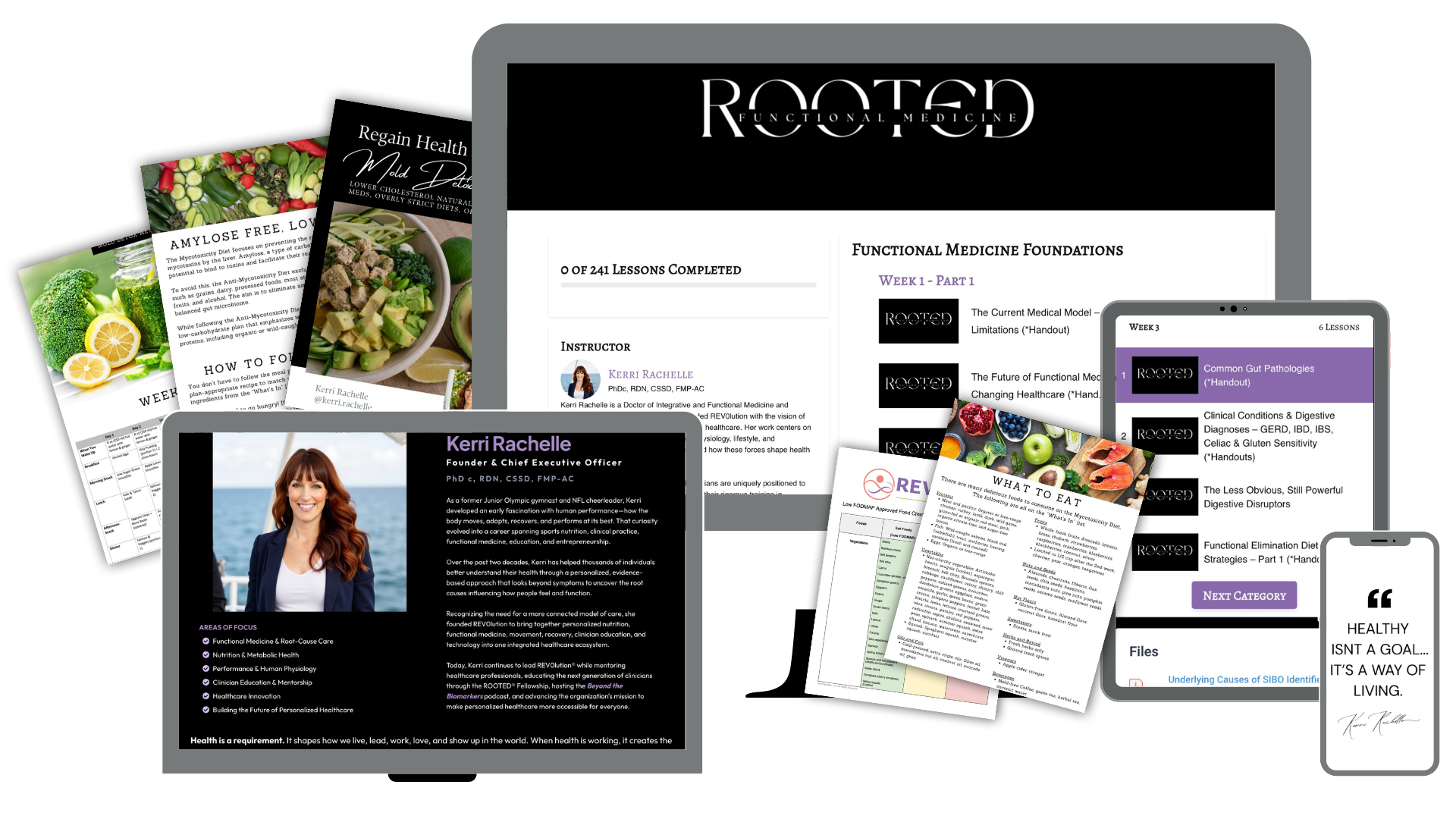
ROOTED virtual certification platform with lessons, therapeutic diet guides, and practitioner materials

Get the syllabus.

Explore the curriculum in greater detail and consider how ROOTED fits your professional background, interests, and goals.

  • Twelve curriculum sections connecting physiology with practical application
  • Thirty weeks of structured virtual education with weekly lesson releases
  • A Resource Vault, therapeutic diet guides, and adaptable protocol templates
  • Optional paid live mentorship and an eight-week patient experience

Request the syllabus using the form below.

Program Questions

A clearer picture
of ROOTED.

Explore the certification, practical application, tuition, and options for live mentorship and firsthand experience of functional medicine care.

Certification & Professional Fit

What certification will I earn?

Graduates who meet ROOTED’s completion requirements earn the Functional Medicine Practitioner–ROOTED Certified (FMP-RC) designation and may use FMP-RC after their name.

FMP-RC is a ROOTED-issued certification. It does not grant a healthcare license or expand an existing professional scope.

Is ROOTED certification the same as board certification?

ROOTED issues its own program certification, FMP-RC. It is not represented as independent third-party board certification.

When comparing credentials, consider who issues the certification, its educational and assessment requirements, and its relevance to your professional role and goals. ROOTED’s credential represents completion of ROOTED’s requirements.

Who is ROOTED designed for?

ROOTED welcomes dietitians, nurses, advanced practice providers, physicians, health coaches, and other health practitioners seeking structured functional medicine education.

The curriculum connects physiology, nutrition, lifestyle, environment, testing, and clinical reasoning. Its application depends on each practitioner’s education, credentials, professional role, and scope.

I’ve completed other functional medicine training. What would ROOTED add?

That depends on the depth and focus of previous training. Some courses introduce individual concepts, while others provide more extensive scientific education.

ROOTED emphasizes bringing that knowledge together: connecting symptoms, history, physiology, nutrition, lifestyle, and testing; identifying meaningful priorities; and developing a personalized, thoughtfully sequenced plan.

Practitioners can build on existing knowledge while strengthening how they apply it. The curriculum also provides a structured foundation for those beginning their functional medicine education.

Does ROOTED expand my professional scope?

ROOTED provides professional education. Certification does not grant licensure, prescribing authority, or additional clinical privileges.

Applying the education—including testing and therapeutic strategies—depends on existing credentials and professional scope. Collaboration and appropriate referral remain part of individualized care.

Clinical Application

How does your active practice influence what you teach?

ROOTED was developed through patient care and the work of teaching practitioners to apply functional medicine. The curriculum reflects practical decisions involved in assessment, prioritization, patient communication, implementation, and reassessment.

Our dietitians also participate in a guided personal experience of the functional method and applicable protocols. Experiencing the process firsthand helps deepen empathy and understanding of what patients encounter when putting recommendations into practice.

Learners interested in this firsthand perspective can explore the separate eight-week patient experience and caring-provider foundations course.

Does the education respond to emerging topics?

Working with patients brings new questions, clinical trends, and implementation challenges into view. Those experiences inform updates to the material as needed.

Examples include questions arising around GLP-1 medications and the evolving peptide landscape. Emerging topics are considered in relation to the available evidence, clinical context, and professional scope.

How deeply does ROOTED cover lab interpretation?

Blood Chemistry & Advanced Functional Testing is one of ROOTED’s 12 curriculum sections. Testing is also explored within relevant systems and clinical presentations.

Topics include metabolic markers, lipids, thyroid panels, anemia patterns, nutrient status, kidney function, and immune markers, alongside specialized functional testing.

The emphasis is on interpreting findings alongside symptoms, history, physiology, and lifestyle—and understanding what a test can clarify, its limitations, and how it may influence the next step.

Does ROOTED teach fixed protocols or individualized care?

Individualized care is central to ROOTED. Protocol templates provide an organizing framework for assessment, foundational priorities, intervention sequencing, and reassessment.

They are intended to be adapted around the person’s history, findings, priorities, resources, and response to care. Professional judgment and patient partnership remain essential.

What practitioner tools and materials are included?

Enrollment includes the Resource Vault and adaptable protocol templates alongside the curriculum.

  • Patient-facing educational handouts
  • Therapeutic diet guides, including AIP, SCD, and low FODMAP approaches
  • Lifestyle resources and symptom trackers
  • Practitioner worksheets and assessment tools
  • Protocol frameworks supporting priorities, sequencing, and reassessment

These materials support patient education and practical application without creating everything from scratch.

Learning Format & Additional Support

How does the 30-week program work?

ROOTED is a virtual certification covering 12 distinct curriculum sections. Lessons unlock weekly over 30 weeks within the online learning platform.

Unlocked material can be reviewed at your own pace alongside the accompanying tools and educational materials. The entire curriculum is not released at enrollment.

Can I learn alongside my current work?

The virtual format allows practitioners to plan study around existing work and responsibilities. Weekly releases provide structure, while unlocked material can be revisited during program access.

The time needed varies with previous knowledge and how deeply each learner explores the lessons and accompanying materials.

What does optional live mentorship include?

Live mentorship is available for an additional $3,000 and is purchased separately from certification.

It includes weekly Q&A opportunities through a designated question-submission form, with Q&A sessions held when questions are submitted, plus a monthly learning session.

Mentorship provides additional guidance for exploring clinical questions and connecting the education with practical application.

What is the patient experience and caring-provider foundations course?

This optional eight-week experience costs $2,000. Participants become patients within our practice, receive a personalized functional medicine program, and experience the care process firsthand.

The experience combines eight weeks of lectures on the foundational skills of a caring provider with six individual appointments:

  • One 90-minute initial appointment
  • Three weekly follow-up appointments
  • Two additional follow-ups, spaced two weeks apart

The purpose is to deepen empathy, patient communication, and understanding of what it feels like to receive recommendations and implement a personalized plan.

This is a separate patient-care and educational experience. It is not included in the certification or live mentorship fee.

Do I need to wait for a new cohort?

ROOTED offers open enrollment. The program follows weekly content releases rather than requiring everyone to begin on a shared cohort start date.

Tuition & Enrollment

How much does ROOTED cost, and what is included?

Tuition is $8,000 for the complete 30-week virtual certification. This includes all 12 curriculum sections, the Resource Vault, therapeutic diet guides, practitioner tools, and adaptable protocol templates.

Live mentorship and the eight-week patient experience are optional, separately priced additions.

What is the total investment with the optional additions?
  • ROOTED certification: $8,000
  • Optional live mentorship: an additional $3,000
  • Optional patient experience and caring-provider foundations course: an additional $2,000

Certification with live mentorship totals $11,000. Certification with the patient experience totals $10,000. All three offerings together total $13,000.

Are payment options available?

Financing is available. Review current payment options and terms during enrollment.

Where can I request the syllabus and program information?

Use the Get the Syllabus option at the bottom of this page to request a closer look at the curriculum and program information.

Beyond Certification

Can graduates apply to join your team?

Yes. Graduates who successfully complete ROOTED may apply to be considered for opportunities with our team.

Opportunities depend on available positions, professional credentials, applicable requirements, and mutual fit. Certification does not guarantee employment or a position.

Does enrollment include patients or a fellowship position?

Certification enrollment does not include a patient caseload, employment, or a fellowship position. Optional mentorship and applications for available team opportunities are separate from certification enrollment.

The optional patient experience means receiving care as a patient within our practice; it does not involve being assigned patients to treat.