


Want more?
Download the free 2-Week Reset Guide, created to help you put podcast insights into practice with actionable nutrition, lifestyle, and gut health strategies you can start today.
What to expect:
14-Day Nutrition Plan
Recipe Book
Gut Health Hacks
Nutrition Tips
Fitness Routines
Dedicated Community
How to Break an Intermittent Fast: What to Eat After Fasting
How to Break an Intermittent Fast: What to Eat After Fasting
Written by Kerri Rachelle, PhD(c), RDN, CSSD, FMP-AC
Founder & CEO, REV0lution | Doctor of Integrative & Natural Medicine Candidate
Quick Answer
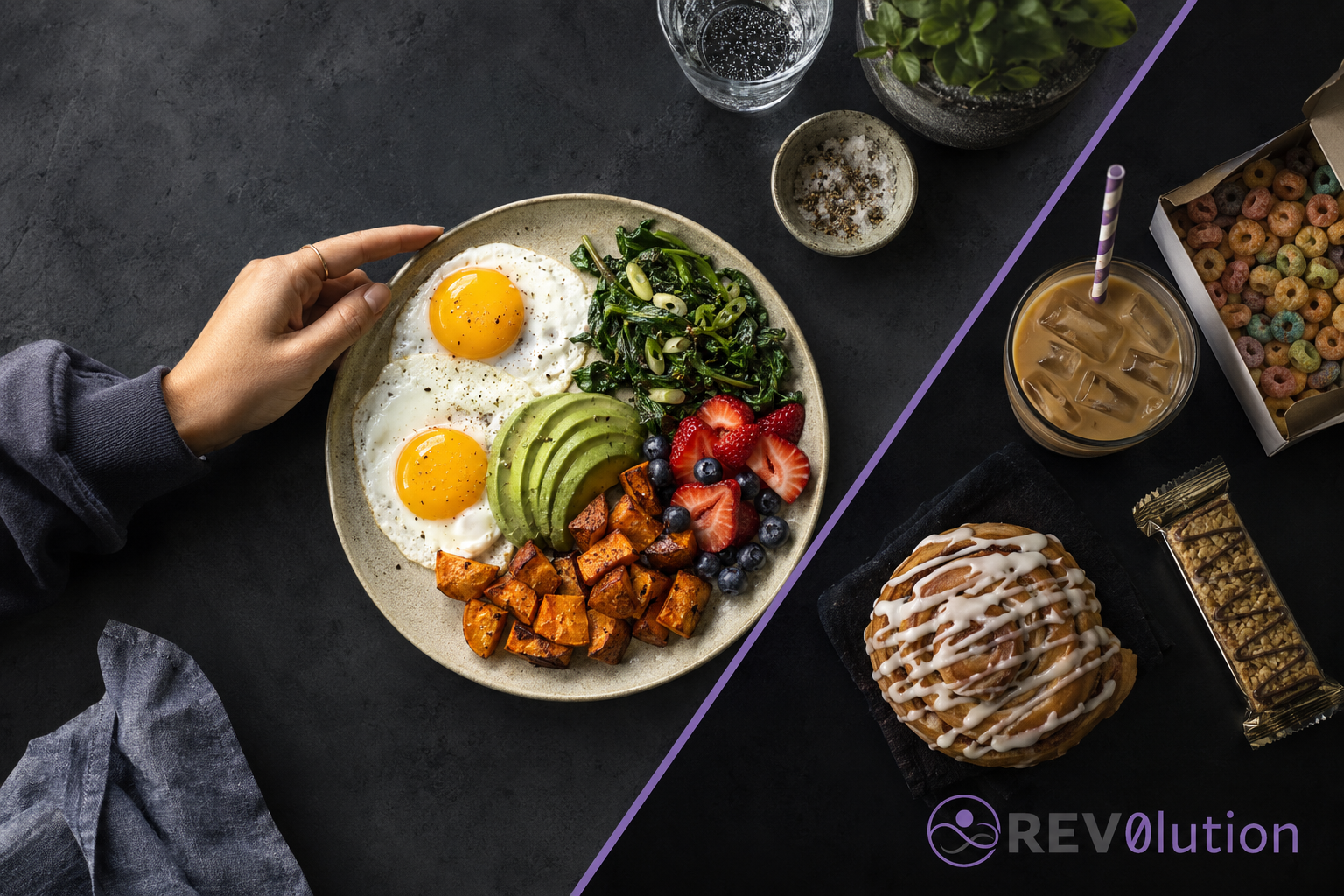
The best way to break an intermittent fast is with a complete, minimally processed meal—not the quickest carbohydrate you can grab. Start with real-food protein, add fiber-rich vegetables, include a naturally occurring fat, and choose an individualized portion of whole-food carbohydrate if desired. This combination generally produces a steadier post-meal glucose response and greater satiety than breaking a fast with cereal, pastries, juice, sweetened coffee, snack bars or other refined convenience foods.
Fasting does not make a sugar-laden breakfast healthier. What you eat when the fasting window ends matters just as much as how long you fasted.
Key Takeaways
Break your fast with a complete meal—not a snack designed for convenience.
Begin with real-food protein such as eggs, fish, poultry or meat.
Add fiber-rich vegetables and a naturally occurring fat to slow digestion and improve satisfaction.
Whole-food carbohydrates can absolutely fit, but they should be paired with protein, fiber and fat rather than eaten alone.
Pastries, cereal, juice, sweetened coffee, flavored yogurt, granola bars and many smoothies can deliver a large amount of rapidly absorbed carbohydrate without enough protein or fiber.
“High protein” and “zero sugar” labels do not make a bar, shake or artificially sweetened packaged food equivalent to a real meal.
If you become so ravenous that you repeatedly grab whatever is available, the fasting window may be too long or your previous meals may be inadequate.
You completed the fast. Now comes the part that may matter even more: what you eat next.
After going 12, 14 or 16 hours without food, it is tempting to grab whatever is quickest—a flavored coffee, granola bar, pastry, cereal, juice or sweetened “healthy” smoothie. But breaking a fast with mostly refined carbohydrate and sugar can produce a rapid rise in blood glucose, a larger insulin demand and another wave of hunger or fatigue soon afterward.
The goal is not to eat as little as possible or search for a magical food that preserves the fast. The fast is over. The goal is to give your body a complete meal that provides protein, fiber, naturally occurring fat and, when appropriate, a quality carbohydrate source.
A well-constructed first meal can support steadier energy, greater satiety, muscle maintenance and a more controlled post-meal glucose response. A poorly constructed one can turn an intentional fasting schedule into a cycle of restriction, glucose spikes, cravings and reactive eating.
If you are new to fasting, begin with What Is Intermittent Fasting?. If your current schedule feels unnecessarily difficult, read How to Start Intermittent Fasting Without Making It Miserable.
Why What You Eat After Fasting Matters
Intermittent fasting changes when you eat, but it does not automatically improve what you eat. A fasting schedule followed by a highly refined, sugar-heavy meal is not the metabolic win many people assume it is.
When the first meal is dominated by sugar or rapidly digested refined carbohydrate, glucose can enter the bloodstream quickly. The pancreas responds by releasing insulin so that glucose can move out of the blood and into cells. That is normal physiology, but the size and speed of the rise can matter—particularly for someone with insulin resistance, prediabetes, reactive hypoglycemia or difficulty regulating appetite. A sharp rise may also be followed by renewed hunger, cravings or an energy dip, making it harder to eat intentionally for the remainder of the day.
This is why meal construction matters. Protein, fiber-rich plants and naturally occurring fats generally slow the digestion and absorption of a mixed meal, improve satiety and moderate the glucose response to carbohydrate. The answer is not necessarily to eliminate carbohydrate. It is to stop eating isolated, refined carbohydrate and calling it a meal.
Breaking an Intermittent Fast Is Not the Same as Breaking a Prolonged Fast
The guidance in this article applies to ordinary intermittent fasting, such as a 12- to 18-hour overnight fast. Breaking a multi-day fast is a different clinical situation, particularly for someone who is undernourished, medically vulnerable or taking glucose- or blood-pressure-lowering medication. Longer fasting should not be treated as an amplified version of skipping breakfast and may require individualized supervision.
A longer fast changes the situation. Someone ending a multiday fast may require a more deliberate refeeding plan, particularly when malnutrition, significant weight loss, electrolyte abnormalities or medical conditions are present. That distinction is explained in Intermittent Fasting vs. Prolonged Fasting.
What Should You Eat After Intermittent Fasting?
The first meal should look like a meal.
Build it around a recognizable protein source, vegetables or other fiber-rich plants, naturally occurring fat and enough food to support your energy needs. Whole-food carbohydrates can be included according to activity, glucose regulation, symptoms and personal tolerance.
A practical template includes:
Eggs, fish, poultry, meat or another minimally processed protein
Vegetables, greens, berries or other whole plants
Avocado, olives, nuts, seeds or another naturally occurring fat
Potatoes, sweet potatoes, winter squash, fruit or another individualized whole-food carbohydrate
This is a Paleo-like template, not a rigid command to eliminate every grain, legume or dairy food regardless of tolerance, culture or clinical need. The foundation is recognizable food—not a manufactured product designed to meet a particular macro target.
Start With Meaningful Protein
Protein supports satiety, muscle maintenance, recovery and healthy aging. It is especially important when fasting reduces the number of daily eating opportunities.
A cup of coffee with collagen is not a complete protein-rich meal. Collagen can have a place in a nutrition plan, but it does not provide the same amino-acid profile as eggs, fish, poultry, meat, dairy or an appropriately selected plant-protein combination.
Likewise, a protein bar should not automatically replace a meal because the wrapper advertises 20 grams of protein. Read the ingredient list. Artificial sweeteners, manufactured flavors, emulsifiers and isolated ingredients do not become equivalent to real food because the protein number is high.
Include Fiber-Rich Plants
Vegetables, fruit, nuts, seeds and other whole plants contribute fiber, micronutrients and compounds that support digestive and metabolic health.
Fiber can also slow digestion and help make the first meal more satisfying. However, someone with significant bloating, gastroparesis, active gastrointestinal symptoms or sensitivity to large raw salads may tolerate cooked vegetables better.
“Eat more fiber” should not override digestive context.
Add Naturally Occurring Fat
Dietary fat contributes to satiety, provides essential fatty acids and supports the absorption of fat-soluble vitamins. Choose fats from recognizable foods such as avocado, olives, nuts, seeds, eggs, fish and appropriately selected animal foods.
Breaking a fast with a large quantity of added fat is not inherently more metabolic because it produces a smaller glucose response. Butter coffee and MCT oil still provide energy, and consuming fat without adequate protein or micronutrients does not create a complete meal.
Use Whole-Food Carbohydrates Intentionally
You do not need to avoid carbohydrates simply because you fasted.
Carbohydrate needs vary according to:
Insulin sensitivity
Physical activity
Training volume
Muscle mass
Sleep
Hormonal status
Medication
Personal tolerance
The remainder of the day’s food intake
A woman completing a demanding strength or endurance session may need a different meal than someone who is sedentary and working to improve glucose regulation.
Appropriate carbohydrates may include potatoes, sweet potatoes, winter squash, fruit or other minimally processed sources selected for the individual. The goal is not universally low carbohydrate. It is the right amount and type of carbohydrate inside a complete real-food meal.
Does the Order in Which You Eat Food Matter?
Some human studies suggest that eating vegetables and protein before carbohydrate may reduce the immediate post-meal glucose rise compared with eating carbohydrate first. That may be useful for certain people with insulin resistance or significant post-meal glucose excursions.
It does not mean every meal needs to become a rigid sequence with a timer.
A practical approach is to avoid breaking a fast with isolated refined carbohydrate. Instead of beginning with juice, pastries, candy or a sweetened coffee drink, eat a complete meal containing protein, plants and fat. If the meal includes a whole-food carbohydrate, eat it as part of that meal rather than treating it as the entire meal.
Food order can be a useful glucose-management strategy, but it cannot rescue a poorly constructed meal. Starting with protein and non-starchy vegetables may help moderate the post-meal rise; the more important habit is ensuring that refined carbohydrate is not the entire meal.
What Should You Avoid Immediately After a Fast?
There is no single food that ruins every benefit of an ordinary fast, but some choices are more likely to produce poor satiety, digestive discomfort or rebound eating.
Avoid making the first meal:
A large amount of added sugar
A refined pastry or dessert by itself
An enormous restaurant meal
Alcohol
Fried ultra-processed food
An artificially sweetened shake
A collection of bars and packaged keto snacks
Several sweetened coffee drinks
A reward for having endured the fast
REV0lution does not recommend building metabolic health on products containing artificial sweeteners, colors, unnecessary preservatives, emulsifiers and manufactured flavor systems. “Zero sugar” does not mean healthy, and “keto” does not mean minimally processed.
If a real-food alternative is available, why make an unnecessary additive part of the daily plan?
What Are Good Meals to Break an Intermittent Fast?
A good first meal does not need to be elaborate.
Eggs With Vegetables and Avocado
Eggs with sautéed vegetables, avocado and berries provide protein, fiber, fat and a whole-food carbohydrate. Add potatoes or sweet potatoes when additional carbohydrate is appropriate.
Salmon With Greens and Sweet Potato
Salmon provides protein and omega-3 fats, while cooked vegetables and sweet potato create a satisfying meal that may work well after morning training.
Chicken or Turkey Bowl
Use chicken or turkey with greens, roasted vegetables, avocado, herbs and an individualized portion of potato, squash, fruit or another whole-food carbohydrate.
Leftovers From Dinner
Breakfast foods are not required. Leftover meat, fish, vegetables and potatoes may be more nourishing than a packaged breakfast product.
A Complete Smoothie—When Necessary
Whole food is generally preferable because chewing and meal structure contribute to satiety. When a smoothie is genuinely necessary for convenience, appetite or digestive tolerance, build it from recognizable ingredients rather than artificially sweetened powder, juice and flavored syrup. Use an unsweetened protein source that fits the individual, include intact or minimally processed fruit or vegetables, and add an appropriate whole-food fat. Avoid turning it into a dessert-sized drink containing several servings of fruit, dates, honey, juice and sweetened milk.
A smoothie can be thoughtfully constructed, but it should not become the automatic replacement for chewing and eating a complete meal.
Why Are You Ravenous When the Fast Ends?
A fast should not regularly end with a feeling that you could eat everything available.
Extreme hunger may mean:
The fasting window is too long
The previous day’s intake was inadequate
Dinner lacked protein or total food
You trained hard without appropriate recovery nutrition
You slept poorly
You relied on caffeine instead of eating
Your medication affects appetite or glucose
Your menstrual cycle or life stage is affecting hunger
The schedule does not fit your physiology
The answer is not always to become more disciplined. It may be to shorten the fast.
A 12- or 14-hour overnight fast that ends with a calm, complete meal may work better than a 16- or 18-hour fast that repeatedly ends in rebound eating.
What Should You Eat After a Fasted Workout?
Nutrition after exercise should reflect the demands of the session.
After resistance training, prioritize adequate protein and enough total food to support muscle recovery. After longer or more intense endurance exercise, whole-food carbohydrates become increasingly relevant for restoring glycogen.
Do not delay recovery nutrition for several additional hours simply to reach a fasting target. The fasting clock should not outrank the purpose of the workout.
If fasted training causes declining performance, dizziness, poor recovery or compensatory eating later, change the strategy. Fasted exercise is an option—not a superior moral category of exercise.
The Bottom Line
Do not complete a thoughtful fast and then break it with a pastry, sweetened coffee, cereal, juice or a manufactured “health” product simply because it is convenient.
Build the first meal around meaningful real-food protein. Add fiber-rich vegetables or other whole plants, include a naturally occurring fat and choose an individualized portion of whole-food carbohydrate when appropriate. This combination is more likely to support a steadier post-meal glucose response, lasting satiety and better energy than isolated sugar or refined carbohydrate.
You do not need to fear carbohydrates, make the meal unnecessarily small or perform a perfect eating-order ritual. You do need to eat an actual meal.
If fasting repeatedly leaves you ravenous, shaky or unable to choose food calmly, shorten the fasting window. The best way to break a fast is not with a metabolic trick. It is with nourishing, recognizable food that supports what your body needs next.
Medical Disclaimer: This article is for general educational and informational purposes only and does not provide individualized medical or nutrition advice. It is not intended to diagnose, treat, cure, or prevent disease or replace care from a qualified healthcare professional. Do not change your medications, supplements, diet, fasting schedule, or healthcare plan based solely on this content. [Read the full Medical Disclaimer and Terms & Conditions.]
Frequently Asked Questions
What is the best food to break an intermittent fast?
The best choice is not one magical food but a complete, minimally processed meal. Start with real-food protein, add fiber-rich vegetables or other whole plants, include a naturally occurring fat and choose an individualized portion of whole-food carbohydrate when appropriate. Eggs with vegetables, avocado and berries or salmon with cooked vegetables and sweet potato are better-balanced choices than cereal, juice, pastries, sweetened coffee or a packaged snack bar.
What should I eat after a 16-hour fast?
After a 16-hour fast, eat a normal, complete meal containing adequate protein, fiber-rich plants and naturally occurring fat. Include a whole-food carbohydrate based on your activity, glucose regulation, symptoms and goals. You do not need to make the meal extremely small. You also do not need a shake, supplement or special “fast-breaking” product.
Should I break my fast with protein?
Protein is an excellent foundation for the first meal because it supports satiety, muscle maintenance and recovery. Eggs, fish, poultry, meat, unsweetened dairy if tolerated, or an appropriately constructed plant-protein combination can all work. Coffee with collagen is not a complete protein-rich meal, and a highly processed protein bar is not nutritionally equivalent to real food simply because its wrapper advertises 20 grams of protein.
Can breaking a fast spike blood sugar?
Any carbohydrate-containing meal can raise blood glucose because that is part of normal physiology. However, breaking a fast with sugar or rapidly digested refined carbohydrate—especially without meaningful protein, fiber or fat—may produce a faster and larger post-meal rise. Building the meal around protein, fiber-rich plants and naturally occurring fat, then including an appropriate whole-food carbohydrate, generally supports a steadier response.
What should I avoid eating immediately after fasting?
Avoid making the first meal primarily from added sugar, refined flour or manufactured convenience foods. Examples include pastries, cereal, juice, sweetened coffee, candy, flavored yogurt, artificially sweetened shakes and packaged “keto” snacks. “Zero sugar,” “high protein” and “keto” do not automatically mean minimally processed or metabolically supportive.
Can I break a fast with fruit?
Yes. Whole fruit can be included as part of a complete meal. Pair it with meaningful protein and fat rather than using juice, a fruit-only smoothie or several servings of dried fruit as the entire meal. The goal is not to fear fruit. It is to avoid breaking the fast with a large amount of rapidly absorbed carbohydrate that lacks adequate protein and meal structure.
Should I avoid carbohydrates after intermittent fasting?
No. Fasting does not make carbohydrates inherently harmful. The appropriate amount depends on insulin sensitivity, activity, training volume, muscle mass, sleep, hormonal status, medication and individual tolerance. Choose recognizable sources such as fruit, potatoes, sweet potatoes or winter squash and eat them as part of a complete meal rather than as isolated refined carbohydrate.
Does eating protein and vegetables before carbohydrates reduce a blood sugar spike?
Human studies suggest that eating protein and non-starchy vegetables before carbohydrate may reduce the immediate post-meal glucose rise in some people. This can be a useful strategy, especially for someone with insulin resistance or significant post-meal glucose excursions. However, food order cannot rescue a poorly constructed meal. The more important habit is building the meal from protein, fiber-rich plants, naturally occurring fat and an appropriate carbohydrate source.
Can I break my fast with a smoothie?
You can, but many smoothies contain several servings of fruit, juice, dates, honey, sweetened milk or flavored protein powder and deliver a substantial carbohydrate load very quickly. If a smoothie is necessary for convenience or digestive tolerance, use recognizable ingredients, an unsweetened protein source, a reasonable amount of whole fruit or vegetables and an appropriate whole-food fat. A smoothie should be thoughtfully constructed—not treated as automatically healthy.
Why am I extremely hungry when my fast ends?
Extreme hunger may mean the fasting window is too long, the previous day’s intake was inadequate, dinner lacked protein or total food, or your sleep and training demands have increased your needs. It is better to shorten the fast than repeatedly end it ravenous and unable to choose food calmly. A sustainable 12- or 14-hour overnight fast may work better than forcing 16 or 18 hours.
What should I eat after a fasted workout?
Choose a 3:1 - 4:1 carbohydrate to protein snack for post workout recovery with a complete meal 30 minutes later. The meal should include adequate protein and enough total food to support recovery. After longer or more intense endurance exercise, whole-food carbohydrates become increasingly important for restoring glycogen. Do not delay needed recovery nutrition simply to reach an arbitrary fasting target. If fasted training causes dizziness, declining performance, poor recovery or compensatory eating, change the strategy.
Do I need to break an intermittent fast slowly?
An ordinary 12- to 18-hour intermittent fast is different from a multi-day fast. Most generally healthy adults can eat a normal, appropriately sized meal after routine intermittent fasting. Prolonged fasting may require a more deliberate refeeding plan, particularly when malnutrition, significant weight loss, electrolyte abnormalities, chronic illness or glucose- or blood-pressure-lowering medications are involved.
References
Kim J, et al. Effects of meal sequence intervention on blood glucose regulation in healthy adults: a systematic review and meta-analysis. 2026. PMID: 41837403.
Shaheen A, et al. Postprandial glucose and insulin response to meal sequence among healthy adults. 2024. PMID: 39559800.
Wolever TMS, et al. The effect of adding protein to a carbohydrate meal on postprandial glucose and insulin responses. 2024. PMID: 39019167.
Shukla AP, et al. The impact of food order on postprandial glycaemic excursions in prediabetes. Diabetes Obes Metab. 2019;21(2):377–381. PMID: 30101510.
Sun L, et al. Postprandial glucose, insulin and incretin responses differ by food intake sequence in healthy adults. J Nutr. 2020;150(3):527–534. PMID: 31053510.
Leidy HJ, Clifton PM, Astrup A, et al. The role of protein in weight loss and maintenance. Am J Clin Nutr. 2015;101(6):1320S–1329S. PMID: 25926512.
Chiavaroli L, et al. Effect of low glycaemic index or load dietary patterns on glycaemic control and cardiometabolic risk factors in diabetes: a systematic review and meta-analysis of randomized controlled trials. BMJ. 2021;374:n1651. PMID: 34348965.
Weickert MO, Pfeiffer AFH. Impact of dietary fiber consumption on insulin resistance and the prevention of type 2 diabetes. J Nutr. 2018;148(1):7–12. PMID: 29378044.
Ezpeleta M, Cienfuegos S, Lin S, et al. Efficacy and safety of prolonged water fasting: a narrative review of human trials. Nutr Rev. 2024;82(5):664–681. PMID: 37377031.